Male Burnout
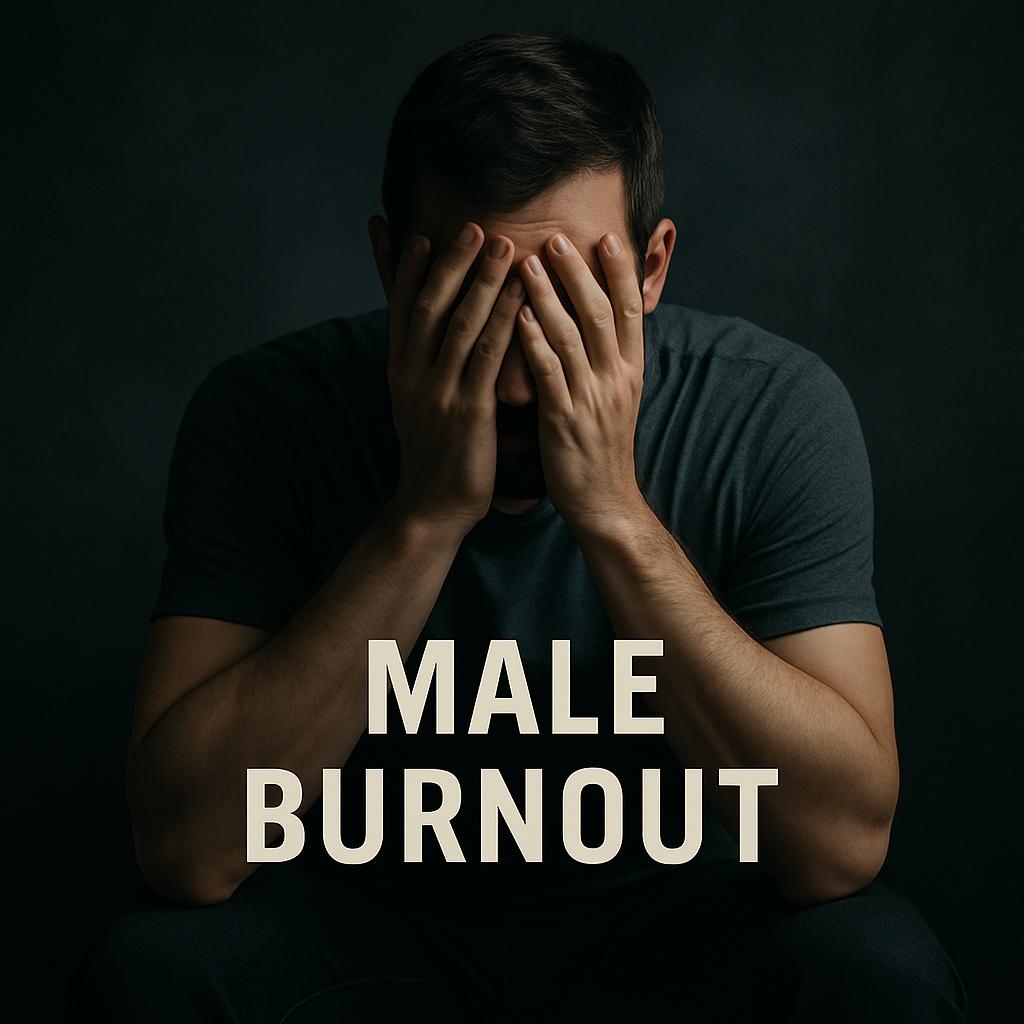
Male Burnout: Spot the Signs. Reclaim Your Energy.
Silent pressure. Burnout dressed as productivity. The urge to keep going when your body’s screaming stop. This is your invitation to slow down—and come back to yourself.
When the Silence Becomes Heavy: What Burnout Really Feels Like for Men
Burnout isn’t just feeling tired. It’s when your body shows up but your mind is miles away. For many men—especially between 25 and 40—it shows up quietly. Masked as “I’ve got this,” “It’s just a rough patch,” or “I don’t have the luxury to stop.”
We live in a culture that glorifies productivity and downplays emotion. Vulnerability is still seen as weakness, and rest as laziness. So we push. We grind. Until the crash comes—and it always comes.
The Subtle Symptoms: How Burnout Creeps In
Burnout doesn’t knock on the door. It seeps in. Slowly. Quietly. Until you barely recognize yourself in the mirror. It’s not always loud. Often, it looks like this:
- Chronic fatigue: Even after sleep, you’re drained.
- Lack of motivation: Things you used to enjoy feel like chores.
- Short fuse: You snap over small things—or withdraw completely.
- Mental fog: Your focus slips. Everything feels blurry.
- Emotional numbness: You feel disconnected—from others, and from yourself.
Burnout rarely screams. It whispers. But those whispers? They erode your energy, clarity, and presence. The sooner you listen, the less damage it does.
Why Burnout Hits Men So Hard
Because most of us were never taught to stop. We were taught to provide. To endure. To be strong, steady, in control. The pressure to “man up” runs deep—and it’s killing us softly.
Men are less likely to talk about their stress. We don’t always have the space—or feel safe enough—to say, “I’m not okay.” Instead, we internalize. We carry the weight of performance, family expectations, financial pressure, and emotional isolation. Until the system breaks.

Reclaiming Your Energy: The Way Back Starts Here
There’s no magic button. But there is a way back. And it starts with one bold move: stop pretending everything’s fine.
1. Acknowledge It
Sounds simple. It’s not. Most men live years in quiet struggle before admitting they’re burned out. The first real win is saying, “Something’s off.” That’s the turning point.
2. Cut the overload
You don’t need to carry it all. Say no more often. Cancel what doesn’t matter. Reclaim time. Let go of the pressure to perform constantly—it’s not sustainable, and it’s not your worth.
3. Reconnect to your body
Burnout pulls us into our heads. Into overthinking, rushing, numbing. You need to get back in your body. Walk in silence. Take a cold shower. Feel your feet on the ground. Move slow, breathe deep.
4. Ask for support
Therapy. Coaching. Conversations with people you trust. You weren’t made to carry this alone. Getting help isn’t weakness—it’s wisdom. It’s strategy. And it’s strength in its realest form.
5. Build grounding rituals
You don’t need to meditate for an hour. Start with 10 minutes. Journal a few lines. Sit with your coffee and no phone. Find pockets of stillness. Return to yourself—daily.
Real Stories: When Men Hit the Wall and Bounced Back
Lucas, 34, was a marketing executive who lived on adrenaline. Late nights, early mornings, constant deadlines. Until his body said “enough.” Anxiety attacks. Insomnia. Memory lapses. He left his role, started therapy, and rediscovered peace in morning walks and phone calls with his dad—things he hadn’t done in years.
Thomas, 39, a senior IT manager, was always “on.” Always connected. Until he realized he couldn’t feel anything anymore—not joy, not sadness. Just numbness. He took a break, moved to a smaller city, opened a local shop, and started living slowly. “I feel like a person again,” he says.
You don’t need to burn it all down. But you do need to check in. And if the answer is silence or pain—it’s time to shift.
Tips for Rebuilding Without Burning Out Again
- Don’t glamorize hustle. Redefine success on your terms.
- Sleep. Eat. Breathe. Hydrate. Sounds basic—but it’s the base.
- Stay connected. Isolation fuels burnout. Even one honest conversation helps.
- Say no. Often. Your energy is currency—spend it with intention.
- Track how you feel, not just what you do.
Healing from burnout isn’t linear. Some days you’ll feel strong, others fragile. That’s okay. The goal isn’t perfection—it’s presence.
The Truth: Rest Is Power
If something inside you is whispering “slow down,” listen. You’re not broken. You’re tired. And that’s human.
Burnout doesn’t mean you failed. It means you cared too much, gave too much, carried too much—for too long. And now, your body’s asking you to come home.
Rest is not a luxury. It’s a return to yourself. Let this be the moment you stop running—and start rebuilding.