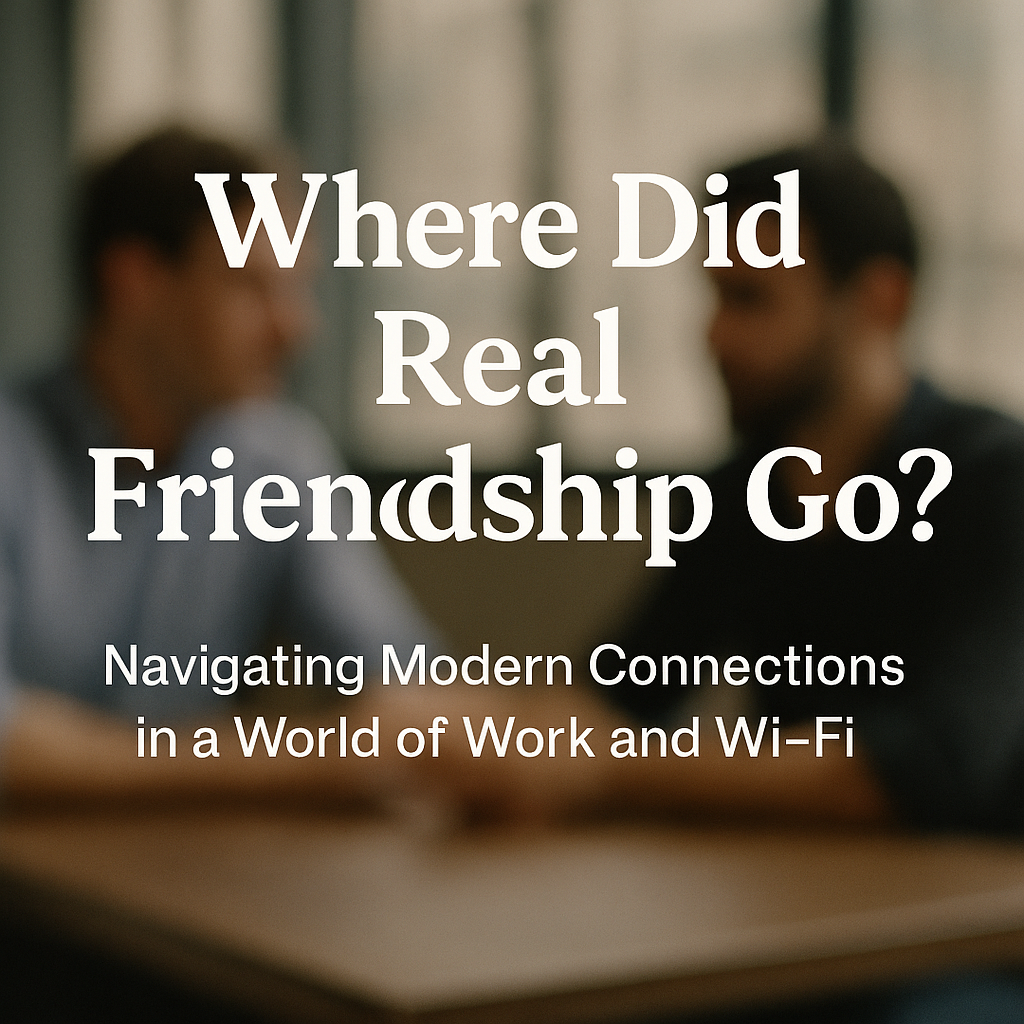
Where Did Real Friendship Go? Navigating Modern Connections In A World Of Work And Wi-Fi
There’s a strange kind of silence creeping into our friendships — the kind that doesn’t come from distance or conflict, but from convenience. Somewhere along the way, the people we used to call just to chat were replaced by coworkers, business partners, and networking contacts. And the friends we used to see every week? We now “keep in touch” with them by reacting to their Instagram stories.
This isn’t just nostalgia talking — it’s a real shift in how we relate to one another. And for many men, it’s starting to feel like a quiet loneliness masked by productivity and connection that’s only skin-deep.
The Rise of Work-Based Friendships
It’s no secret that we spend most of our waking hours working. For many people, the office — or Zoom call — has replaced the coffee shop, the basketball court, or the Friday night bar. We naturally end up bonding with those we work with. We eat with them, message them, joke during breaks, and sometimes open up more to them than to our childhood friends.
But here’s the catch: those friendships are often conditional. They’re built on shared tasks, mutual deadlines, and a kind of emotional proximity that’s tied to a paycheck. The moment you leave the job, or your role changes, the connection weakens. That lunch buddy from accounting might not even return your texts once you’re no longer in the same Slack channel.
Work friendships aren’t fake — but they’re different. They’re easier to build because of structure, but harder to sustain outside of it. And if your social circle is mostly made of people you’re paid to be around, it’s easy to lose track of who your real friends are.
Friendship in the Era of “Low Maintenance” Connections
We live in a time where people boast about “low-maintenance friendships” — the kind where you don’t talk for months and pick up where you left off. That sounds great on paper. But too often, it becomes an excuse to never show up at all.
Social media makes it worse. It creates a false sense of closeness. You like your friend’s vacation photo, they comment on your story, and that’s supposed to be enough. But there’s no eye contact. No shared silence. No real-time energy exchange. Just carefully timed replies and digital crumbs of attention.
This ease of interaction — asynchronous, low-effort, and image-driven — has made relationships feel more like brand management than human connection. You don’t need to check in anymore; the algorithm does it for you.
Why Real Friendship Feels So Rare
Part of the reason authentic friendship feels rare is because it demands presence. Not just physically, but emotionally. And in a world that values productivity, busyness, and hustle, presence feels like a luxury we can’t afford.
We’re constantly told to “optimize” our lives — our sleep, our workouts, our morning routines — and somewhere in that spreadsheet, spontaneous connection got cut for not being efficient enough. Real friendship isn’t efficient. It’s messy, slow, sometimes inconvenient. And that’s what makes it beautiful.
Today, asking a friend to come over for no reason feels like too much. Hanging out with no plan is rare. Conversations drift into calendar invites. Vulnerability becomes something we script in Notes before sending. We’re craving real friendship but terrified of the unpredictability that comes with it.
The Cost of Convenience
Convenience is the killer of depth. It’s made relationships smoother but shallower. And we don’t always notice the damage until we really need someone — not to like a post, but to sit with us in silence. To hear our doubts. To help us move. To be there without a transaction in return.
Many men, especially, feel this gap. We’re taught to be self-sufficient, not emotionally needy. So instead of saying “I miss my friends,” we dive deeper into work. We text “let’s catch up soon” and never follow through. We joke about group chats being the new bar — but no one’s really opening up.
What Real Friendship Actually Looks Like (Still)
Despite all this, true friendship hasn’t disappeared — it’s just become something we have to be intentional about again. It looks like calling someone for no reason. Sending a voice note when you’re thinking about them. Showing up when it’s awkward or when you’re tired.
It looks like initiating without waiting. Listening without checking your phone. Being honest when things aren’t okay — and creating space for the other person to do the same. And maybe, most importantly, it looks like making time when no one else is.
You don’t need 20 friends. You need a few people who know you in real-time — not just through highlights, but through the boring stuff. The hard days. The quiet ones. The ones you almost didn’t share.
How to Build (or Rebuild) Real Friendship in 2025
- Start Small, But Consistent: Reach out to one person per week. Not to “network.” Just to connect. Ask how they’re really doing.
- Go Beyond Text: Send voice notes. Set up a video call. Better yet, meet in person. Human energy doesn’t translate in DMs.
- Be the One Who Initiates: Someone has to start. Don’t wait for the perfect moment. Just send the message.
- Host Something: Plan a simple meetup — a walk, a meal, a chill night in. You’d be surprised how many people are craving real connection too.
- Be Real First: You can’t control how others show up. But you can set the tone by being open, honest, and present.
Final Thoughts: Connection That Outlasts the Algorithm
It’s not that we don’t want deep friendships anymore. It’s that we’re exhausted, distracted, and often unsure how to start again. But the truth is: the people who care about you are often just waiting for a sign that you still care too.
The friendships that will matter in 10 years won’t be the ones you had to keep up via likes and emojis. They’ll be the ones where someone remembered your weird laugh, your quiet seasons, and still chose to stay close.
And in a world where everything is instant, real friendship is still something you have to grow slowly — like trust, like roots, like something sacred.